
Neighborhoods Alan Soumali Serves in Vienna
Alan Soumali is a Persian-speaking REALTOR® with REMAX Galaxy, serving 8 Vienna neighborhoods: Great Falls, McLean, Vienna and 5 more.
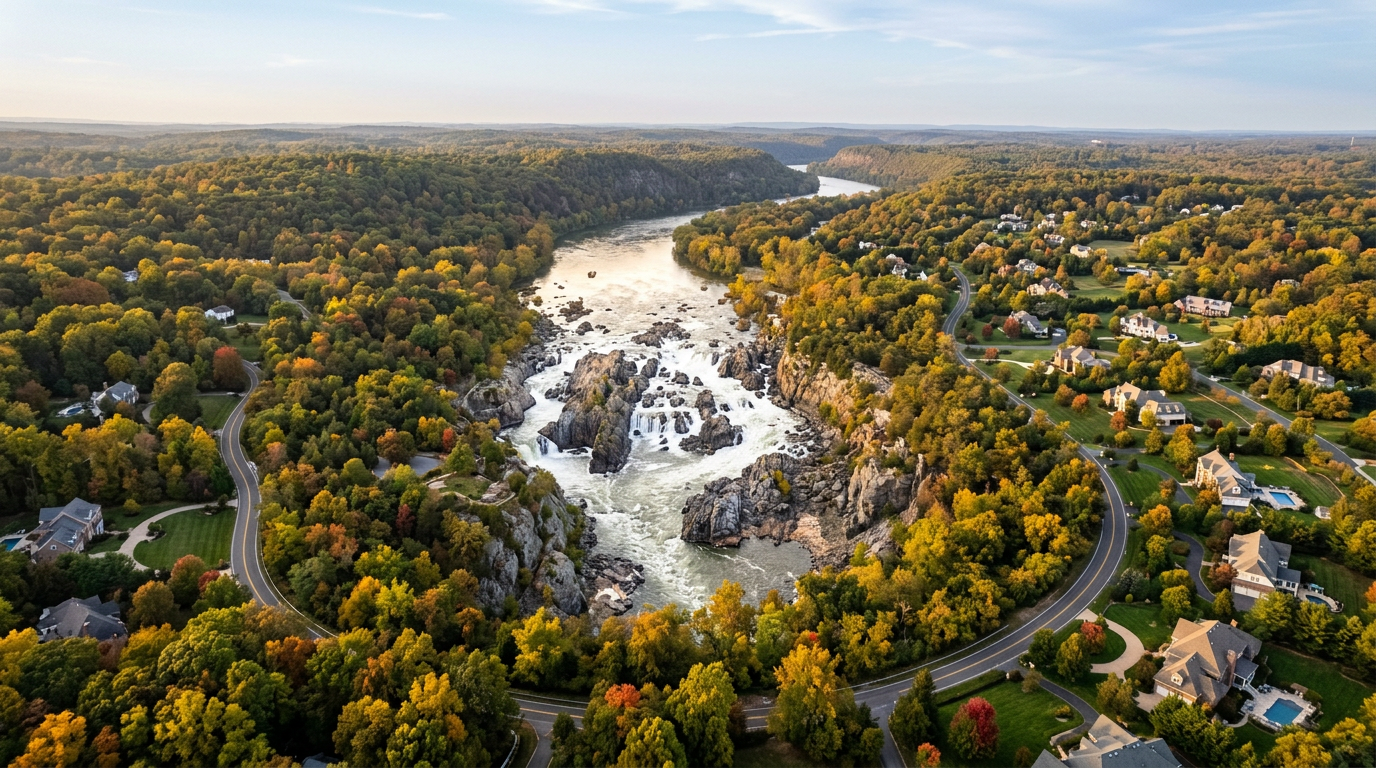
Great Falls
Great Falls sits in northern Fairfax County, Virginia, on the edge of the Washington, D.C. region, with the Potomac River forming its northern boundary. The setting is distinctly green and spacious, with wooded lots, rolling terrain, and a quiet, semi-rural pace that feels removed from the denser suburbs nearby. Much of the housing is on generous parcels, ranging from long-established homes with mature landscaping to larger custom residences built in more recent decades, though styles and lot sizes vary from one pocket to the next.
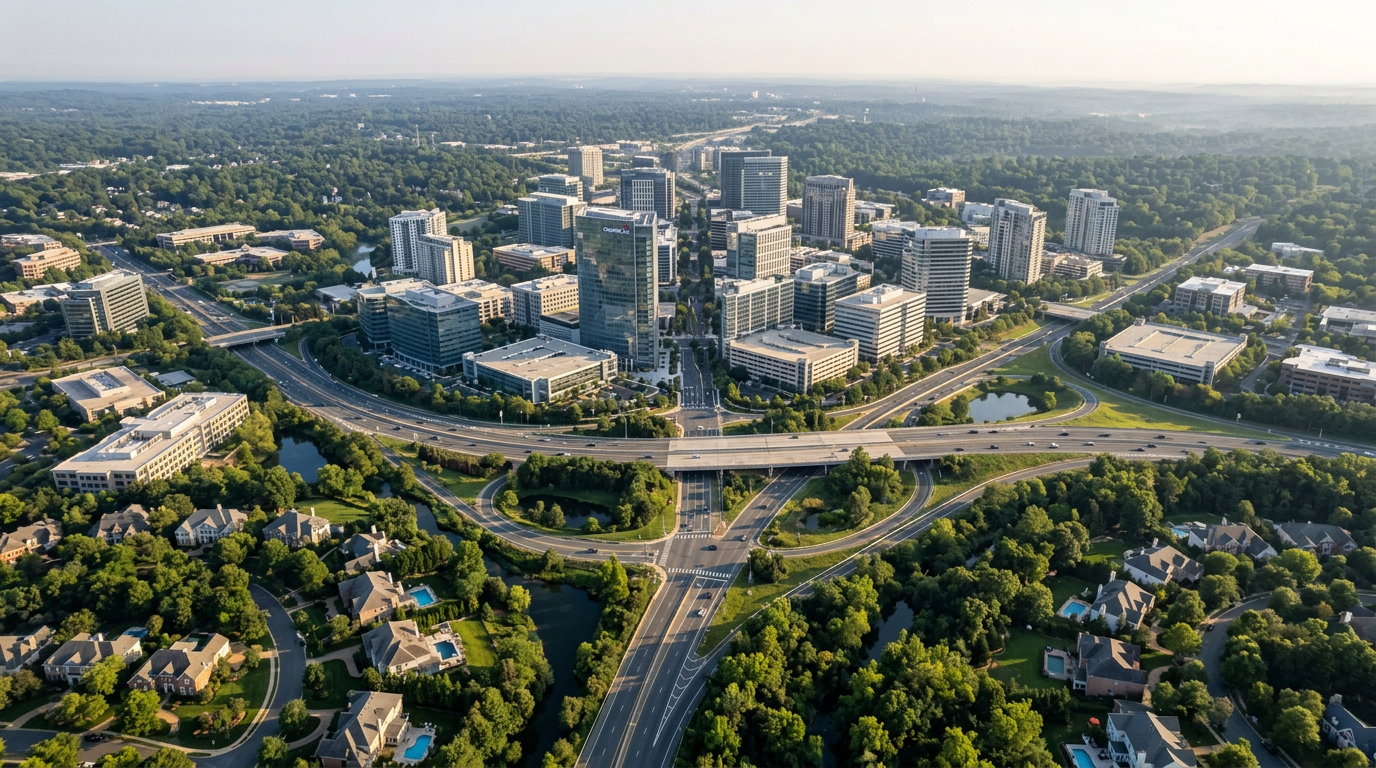
McLean
McLean sits in Fairfax County, in Northern Virginia, a short distance from Washington, D.C., across the Potomac River. It is an unincorporated community with a suburban character, where wooded lots and tree-lined streets give many areas a quiet, residential feel. Housing varies from one part of McLean to the next, with established neighborhoods of mid-century homes, larger custom-built houses on generous lots, and pockets of townhomes and condominiums near the commercial centers.
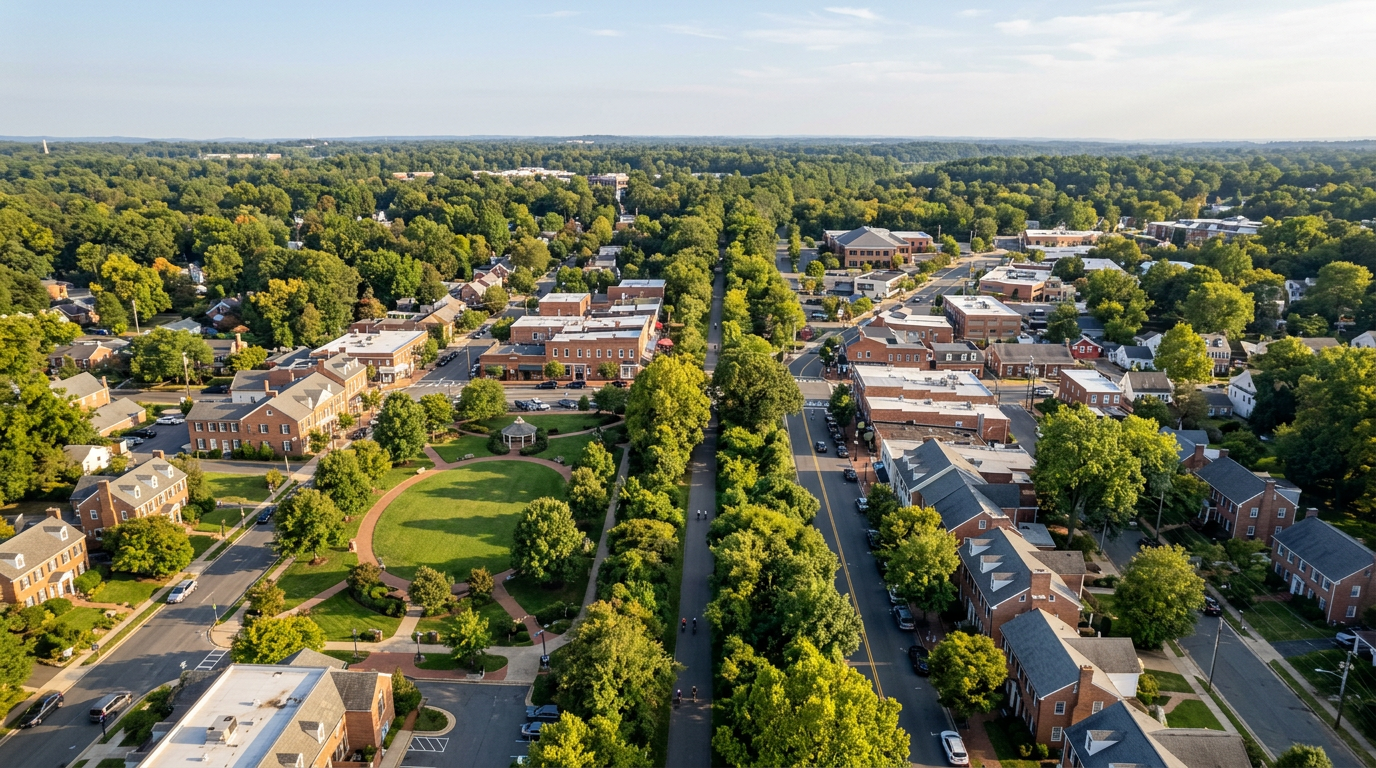
Vienna
Vienna sits in Fairfax County in Northern Virginia, a small town set among the wooded, gently rolling suburbs west of Washington, D.C. Its residential streets hold a mix of housing: older homes near the town center, established neighborhoods with mature trees and varied mid-century styles, and newer infill construction where older houses have given way to larger custom builds. Some areas feel quietly suburban, while others sit closer to the town's commercial core.
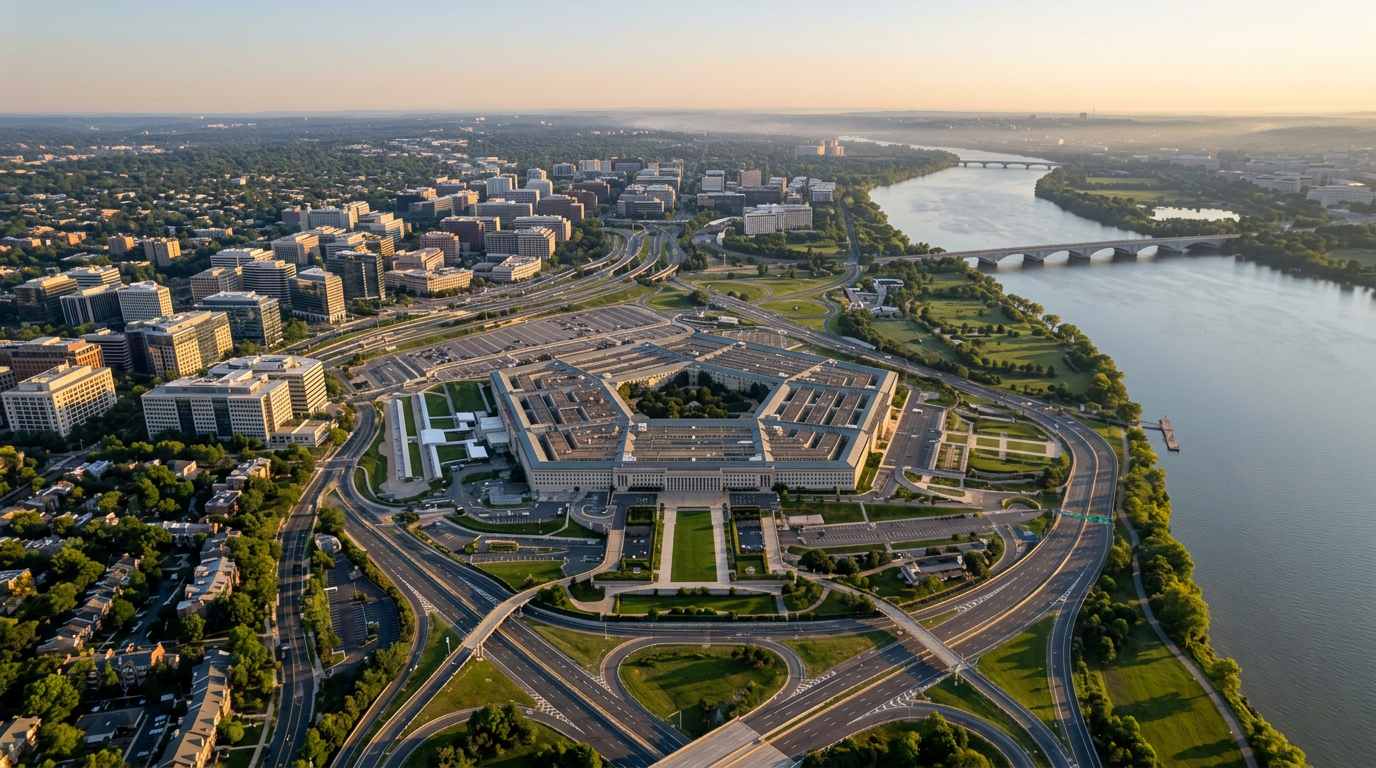
Arlington
Arlington sits just across the Potomac River from Washington, D.C., in Northern Virginia, close enough that the capital shapes much of daily life here. The county is compact and urban in character, organized around Metro corridors where mid- and high-rise buildings cluster near stations. Step a few blocks away and the scene softens into established residential streets with brick colonials, bungalows, and Cape Cods, alongside townhomes, condominiums, and more recent infill construction.
Reston
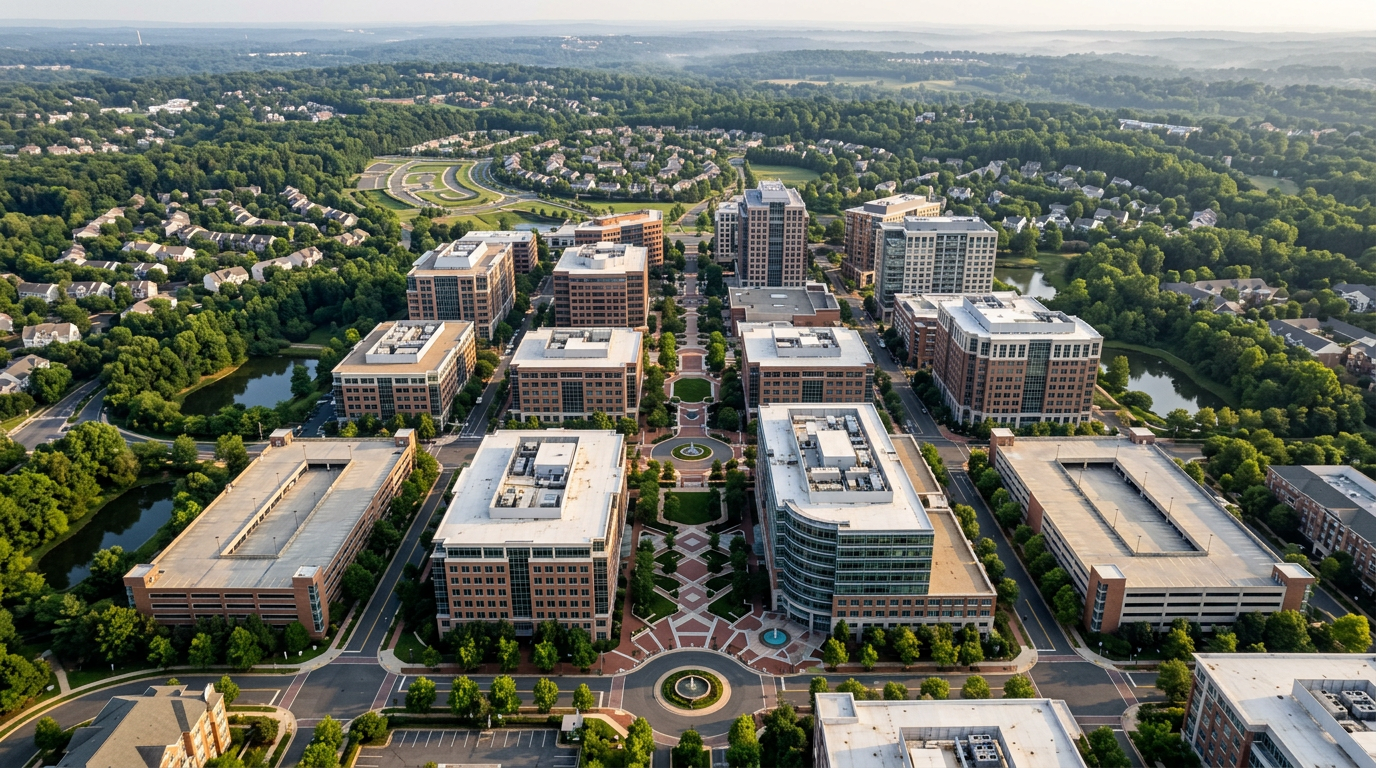
Reston sits in Fairfax County in Northern Virginia, in the western suburbs of the Washington, D.C. area. It was planned from the start as a community where homes, workplaces, shopping, and green space share the same footprint, and that thoughtful layout still shapes daily life. Lakes, wooded paths, and a network of trails and parks run through much of the community, giving residents plenty of ways to get outside.
Bethesda
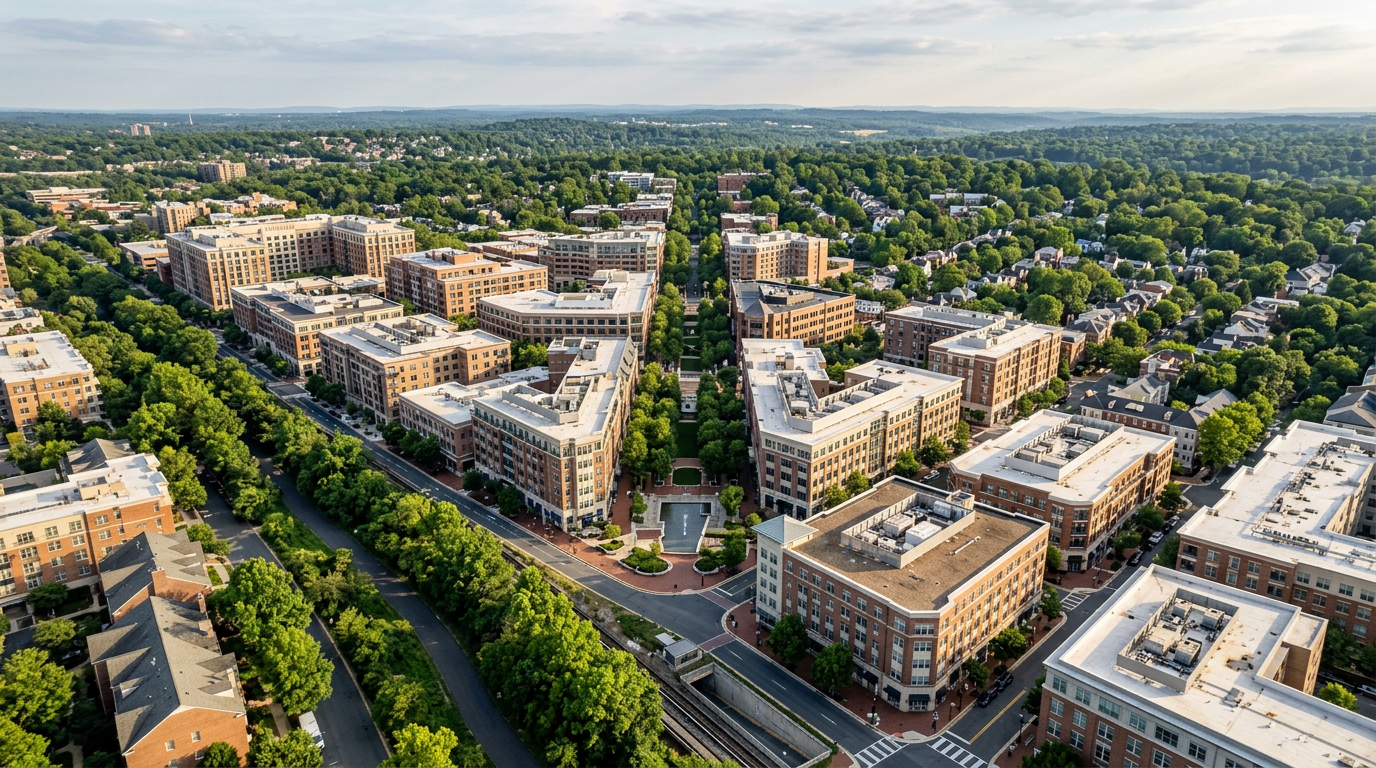
Bethesda sits just northwest of Washington, D.C., in Montgomery County, Maryland, and its rolling, tree-covered terrain gives it a leafy, settled feel. The city is a collection of distinct areas rather than one uniform place. A walkable downtown core of mid- and high-rise buildings, shops, and restaurants anchors the center, while established residential streets nearby offer brick colonials, mid-century homes, and cottages. Farther out, quieter lanes hold larger single-family houses on generous lots, and townhomes and condominiums fill in closer to transit.
Potomac
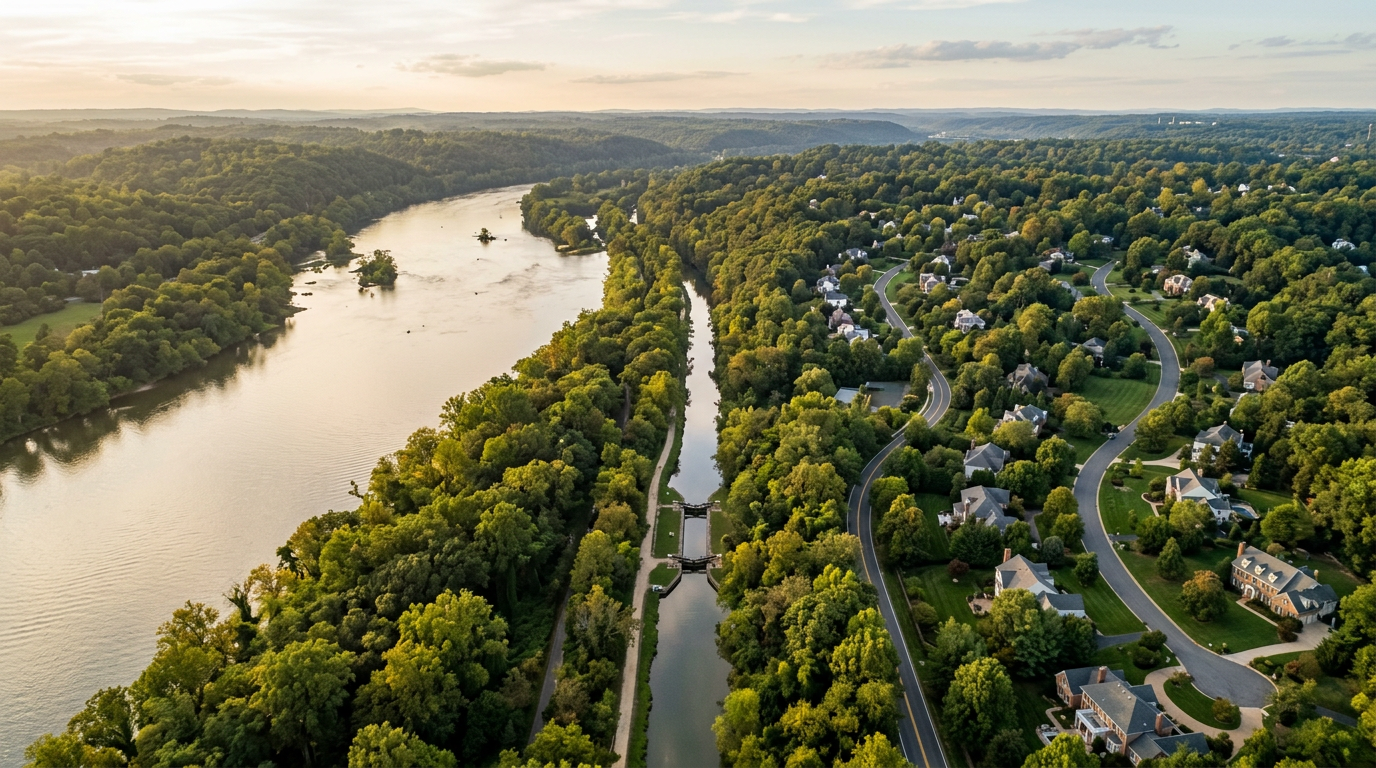
Potomac sits in Montgomery County, Maryland, in the Washington, D.C. metropolitan area, with the Potomac River forming its southern edge. The setting is rolling and heavily wooded, and much of the community has a quiet, green feel. Housing varies from one area to the next, with large custom homes on generous lots, established neighborhoods of traditional brick and colonial-style houses, and townhome and condominium communities closer to the village centers.
Germantown
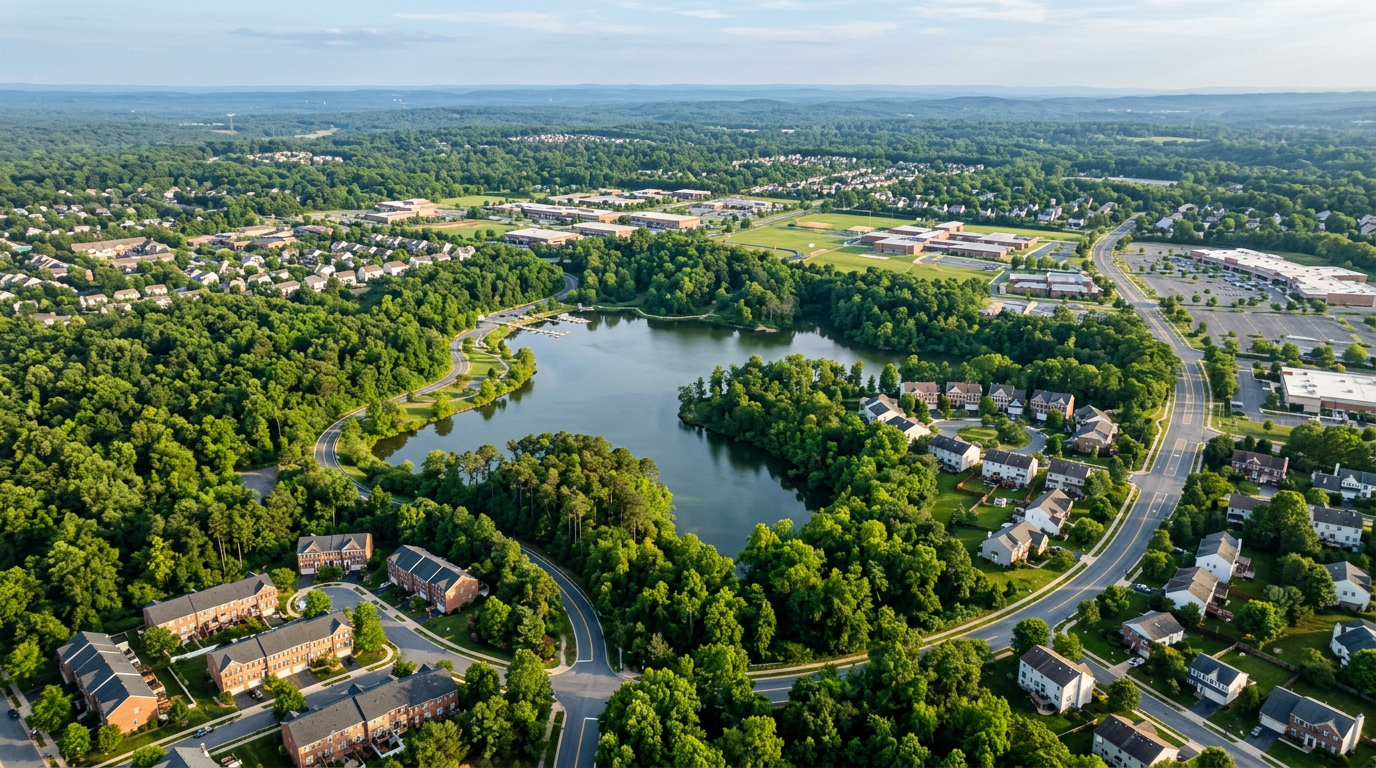
Germantown sits in upper Montgomery County, Maryland, along the I-270 corridor northwest of Washington, D.C. Rolling Piedmont terrain gives the area gentle hills, wooded stream valleys, and open stretches of green that soften its suburban footprint. Rather than growing from a single historic center, Germantown developed as a collection of planned residential communities, and the housing reflects that: townhome clusters, single-family neighborhoods with mature trees, and condominium and apartment communities, each area with its own rhythm.